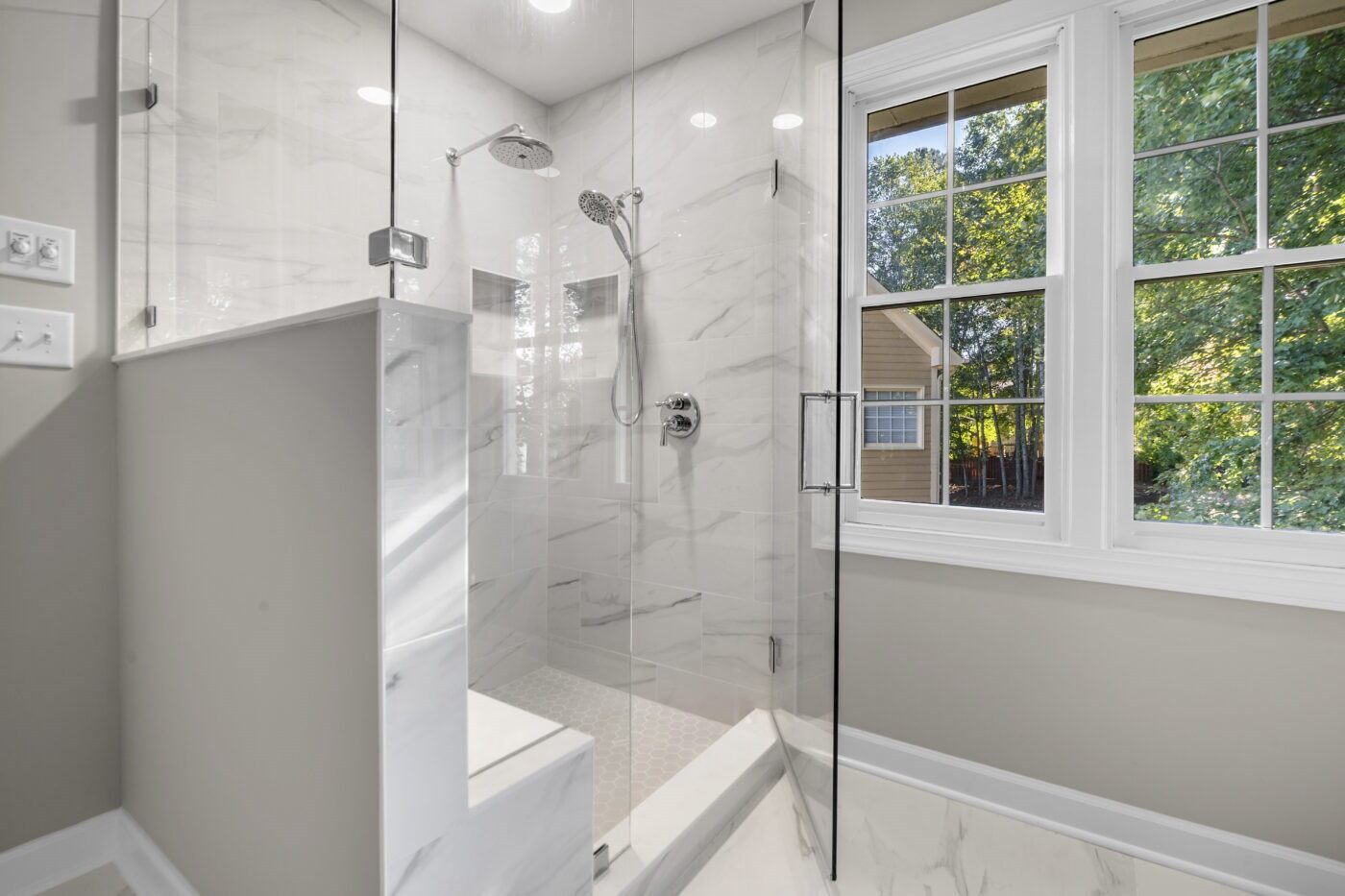
If you're like most of the homeowners who call us, that bathtub hasn't seen real use in years. It's a place to set the cleaning supplies, a step-over hazard, and a pain to clean around. A tub-to-shower conversion turns that wasted space into a walk-in shower you'll actually use every day — and it's one of the most-requested jobs we do across the Triangle.
This guide walks through the real numbers, the timeline, and the decisions that drive your final price, so you can plan with confidence before you ever schedule an estimate.
What does a tub-to-shower conversion cost?
Here's the honest answer most national guides bury: it depends. As of 2026, the majority of tub-to-shower conversions land somewhere between roughly $3,000 and $12,000. That's a wide range, and the spread comes down to three things — materials, whether the plumbing has to move, and what we find behind the old tub walls once we open them up.
To make that range make sense, here's how the tiers usually break down:
- Budget (prefab surround): an acrylic or composite wall kit with a molded base. Fastest and cheapest, but you're limited on design.
- Mid-range (custom tile, same footprint): a tiled walk-in shower where the drain and plumbing stay roughly where they are. This is the sweet spot for most homeowners.
- High-end (full custom): large-format porcelain or natural stone, a linear drain, built-in bench and niches, and a frameless glass enclosure. This is where it starts feeling like a spa.
Why we don't quote a flat price online: the tile is rarely the expensive part. The cost lives in the prep — waterproofing, slope correction, and fixing whatever the last installer skipped. A free in-home estimate is the only way to give you an honest number. Call (919) 698-4382 and we'll come look.
What drives the price up or down?
If you want to control your budget, these are the levers that matter most:
- Moving the plumbing. Keeping the drain and valve where they are saves the most money. Relocating them is the single biggest cost jump.
- Tile choice. Ceramic is economical; porcelain and natural stone cost more in both material and labor. Intricate patterns and large-format slabs add install time.
- Glass. A framed door is the budget option; a frameless enclosure is a significant upgrade in both look and price.
- Add-ons. Built-in benches, multiple niches, and linear drains all add labor — worth it for many, optional for most.
- What's behind the wall. Old water damage, rot, or a substrate that was never waterproofed properly adds repair cost. We'd rather find it now than have you find it in two years.
How long does it take?
A conversion that keeps the existing plumbing footprint usually runs a few days to about a week. Custom tile and proper waterproofing add time, and grout and membranes need cure time we can't rush without compromising the install. You'll get a clear day-by-day schedule before we start, and an update every morning we're on site — no wondering when the crew is showing up.
The process, step by step
Every Titan Tile conversion follows the same disciplined sequence — because the difference between a shower that lasts decades and one that leaks in year two is what happens before the tile ever goes on:
- Demo & haul-away. Old tub out, debris removed, floors and walls protected on the way.
- Inspect & prep. We check the substrate and framing, fix anything compromised, and correct the slope toward the drain.
- Waterproofing. A full membrane system from the base up. This is the step most rushed jobs skimp on — and the reason they fail.
- Tile & set. Layout, cuts, and setting, with the patience to keep lines straight three feet from the wall.
- Grout, seal & glass. Grouted tight, sealed properly, glass and fixtures fitted.
- Walkthrough. We don't leave until you love it — and your lifetime workmanship warranty starts the day we hand it over.
Picture your conversion.
Free in-home estimates across Raleigh, Durham & the Triangle. Honest pricing within 48 hours. Lifetime warranty on every install.